Strip-Mining the Strip Clubs: How Aesthetics, Fashion, and Cultural Theft Shape Modern Entertainment
 Dec, 7 2025
Strip clubs aren’t just venues for adult entertainment-they’re cultural factories. The lighting, the choreography, the costumes, the way bodies are framed and sold-they’re all carefully engineered aesthetics that borrow heavily from global traditions, then repackaged as something new, something profitable. What’s often ignored is how deeply these spaces mine cultural symbols, strip them of context, and turn them into commodities. From the feathered headdresses of Indigenous ceremonies to the silk saris of South Asian weddings, elements of sacred or deeply personal dress are repurposed as ‘exotic’ stage wear. And no one gets paid for it but the club owners.
It’s easy to scroll past a video of a milf escort in dubai and think it’s just another part of the nightlife economy. But when you start asking who designed the outfit, who licensed the pattern, or whether the dancer even knows where that fabric originally came from, the picture changes. This isn’t just about sex work-it’s about the quiet theft of identity dressed up as performance.
Costume as Cultural Appropriation, Not Costume
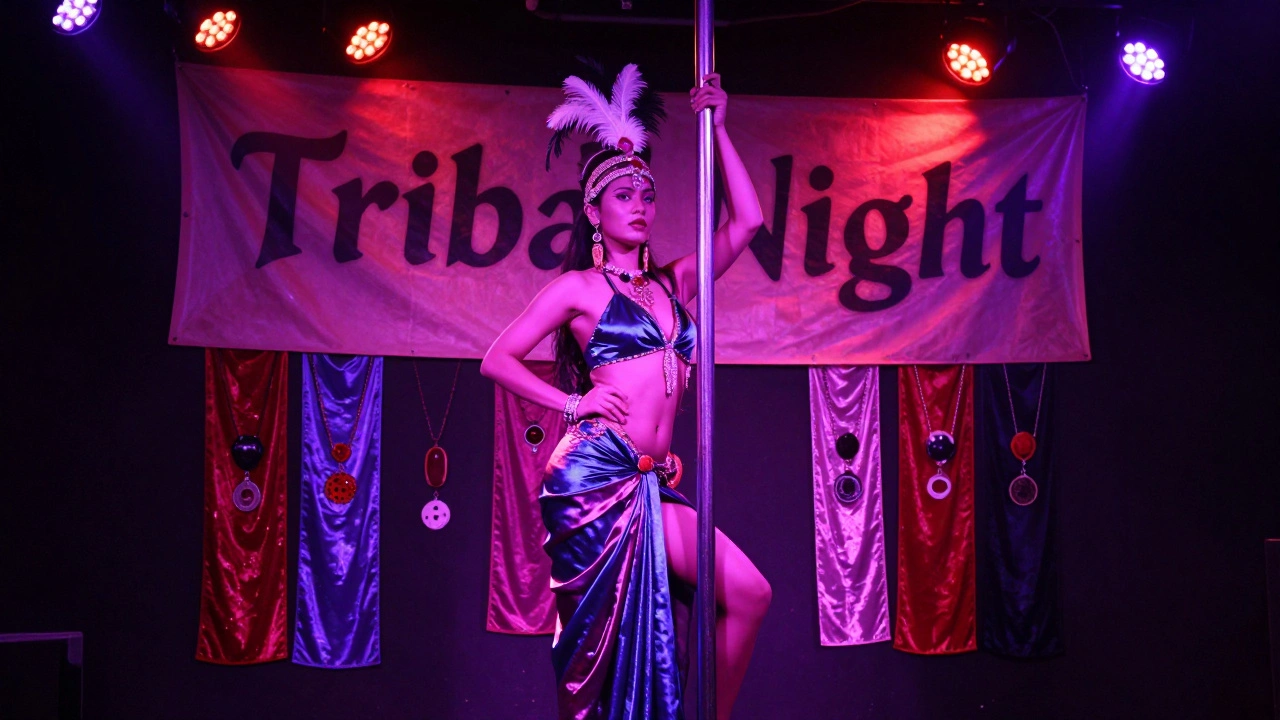
Look at any major strip club in Las Vegas, London, or even Melbourne, and you’ll see dancers wearing what’s labeled as ‘tribal,’ ‘Middle Eastern,’ or ‘Polynesian’ attire. These aren’t costumes worn with respect-they’re costumes worn for profit. The feathered headdresses, once sacred to Plains Indigenous nations, now dangle above pole routines. The bindi, a spiritual mark in Hindu culture, is glued onto foreheads as a ‘sexy accent.’ The kimono, a garment tied to centuries of Japanese textile tradition, is slit up the side and paired with fishnet tights.
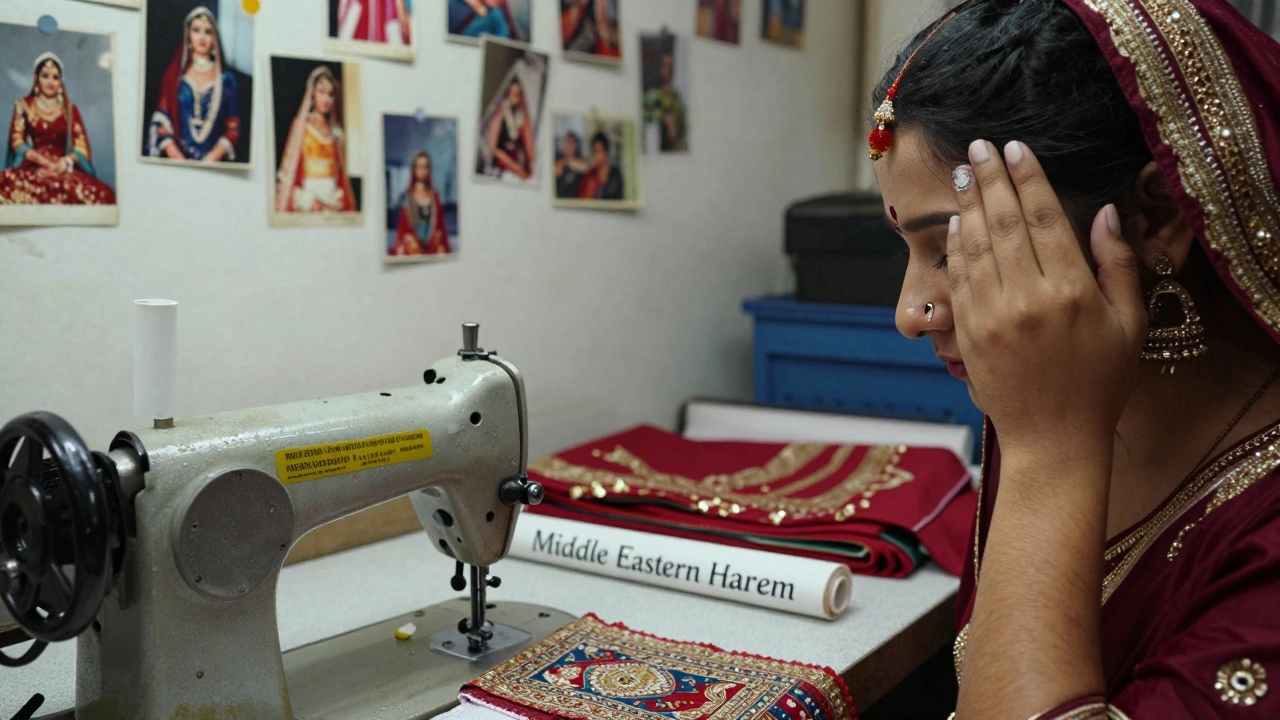
There’s no cultural consultation. No permission sought. No royalties paid. Just a designer in Los Angeles buying cheap fabric from Alibaba, stitching together a ‘harem’ look, and selling it to clubs for $40 a piece. Meanwhile, the communities that birthed these designs see their heritage reduced to a marketing gimmick. And the dancers? Most don’t even know the origin of what they’re wearing. They’re told it’s ‘hot,’ ‘exotic,’ or ‘trendy’-and they show up in it because that’s the job.
Who Gets Paid? Who Gets Erased?
The fashion industry has been doing this for decades. Designers like Jean-Paul Gaultier and Dolce & Gabbana built empires on borrowing from non-Western cultures without credit. Strip clubs are just the bottom rung of that same machine. The difference? In high fashion, the theft is masked by runway lights and Vogue spreads. In strip clubs, it’s under fluorescent bulbs and stage smoke.
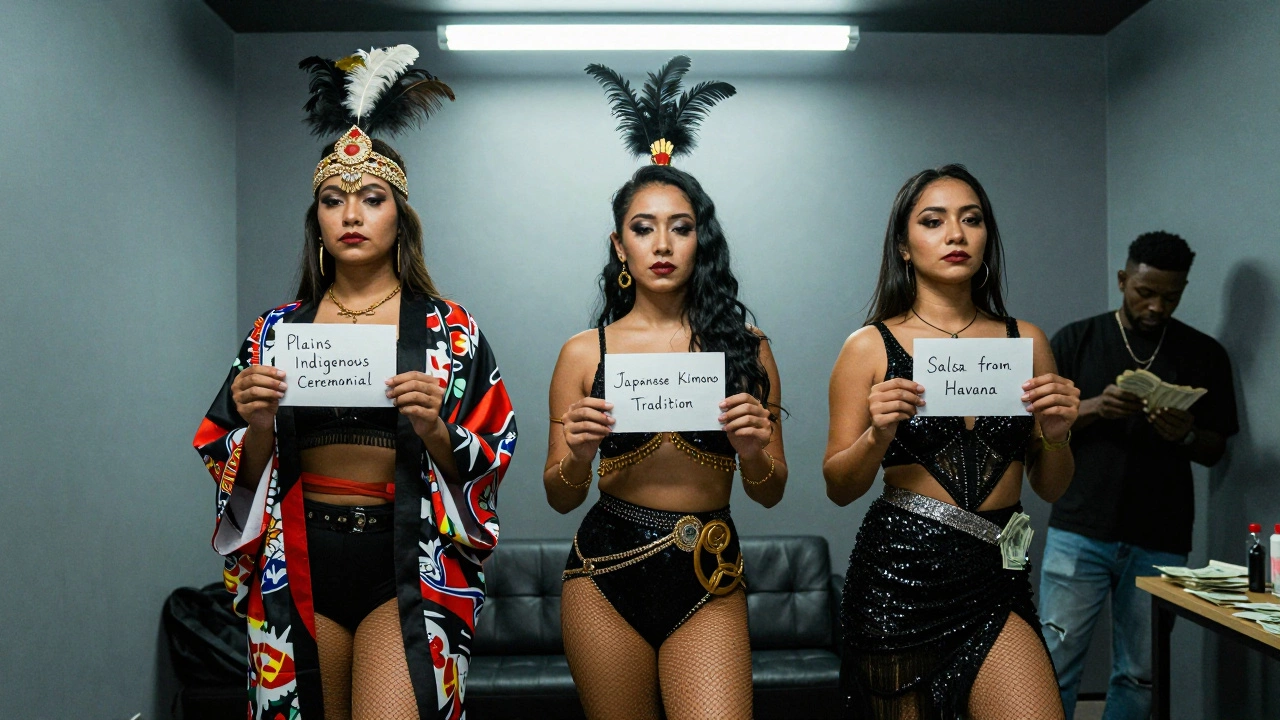
Consider the ‘Latin Bombshell’ theme night. Dancers wear sequined dresses with ruffles, perform salsa moves, and are called ‘fiery’ or ‘passionate.’ But where are the actual Latin American performers? Rarely on stage. Instead, white dancers are paid $200 a night to embody a stereotype. The real salsa dancers in Bogotá or Havana? They’re cleaning tables or teaching classes for $15 an hour. The culture is extracted, repackaged, and sold back to audiences who think they’re experiencing authenticity.
The Rise of the ‘Exotic’ Brand
Strip clubs don’t just sell sex-they sell fantasy. And fantasy is built on myth. The ‘Russian Doll’ isn’t a real person-it’s a marketing label. The ‘Thai Temptation’ isn’t a dancer’s identity-it’s a package. Clubs use these labels because they work. People pay more for ‘exotic’ dancers. And the more a club can tie its branding to distant, misunderstood cultures, the more they can charge.
It’s no accident that clubs in the U.S. and Europe push ‘Asian’ or ‘Middle Eastern’ themes. These are cultures that have been historically othered, exoticized, and sexualized in Western media. Strip clubs don’t invent these tropes-they amplify them. And the result? A generation of dancers, many of them immigrants or low-income workers, are pressured to perform versions of cultures they don’t even belong to.
There’s a reason why you’ll find more dancers in ‘Brazilian’ outfits than actual Brazilians on stage. It’s not about representation. It’s about control. The club owns the narrative. The dancer owns nothing.
When Fashion Meets Exploitation
Fast fashion brands like Shein and Temu have made it easy to buy a ‘harem pants’ set for $8. That same outfit ends up on a stripper’s body, lit by purple LEDs, while the factory worker in Bangladesh who stitched it earns 12 cents an hour. The dancer gets paid $100 a night. The club owner makes $3,000. And the original culture? Erased.
This isn’t just about clothing. It’s about labor, power, and who gets to define beauty. When a dancer wears a sari-style wrap, she’s not honoring Indian heritage-she’s fulfilling a fantasy created by white male patrons and sold by a club owner who’s never been to Mumbai. The sari, worn with dignity in religious ceremonies and weddings, becomes a prop in a transactional fantasy. And the irony? Many of these dancers are women of color themselves, forced to perform the very stereotypes that marginalize them in everyday life.
What’s the Alternative?
There are clubs that get it right. In Berlin, some venues hire dancers from the cultures they’re inspired by. In Montreal, a few clubs partner with cultural organizations to educate patrons on the origins of the music and attire used. In Melbourne, one venue started a ‘Cultural Credit’ program-dancers wear traditional garments only if they’ve been taught the meaning behind them by community elders.
These aren’t perfect solutions. But they’re steps toward accountability. They ask: Who made this? Who benefits? Who’s left out? And most importantly-do we have the right to use this?
Change starts with awareness. If you’re a patron, ask: Why is this dancer wearing that? Where did it come from? Who designed it? If you’re a dancer, ask yourself: Do I know the story behind what I’m wearing? Or am I just filling a role?
The Myth of Consent
People say, ‘If the dancer consents, it’s fine.’ But consent doesn’t exist in a vacuum. When you’re $2,000 in debt, when your visa depends on your job, when your options are limited to three types of work-consent becomes a luxury. And when the clothes you’re forced to wear are stolen from cultures that have been colonized, oppressed, and erased-you’re not just performing. You’re complicit in a system that profits from your silence.
The same system that sells dubai escort milf as a fantasy also sells the idea that exoticism is harmless fun. But fantasies don’t exist in a bubble. They’re built on real histories, real pain, and real people who never agreed to be part of the show.
Breaking the Cycle
It’s not about banning strip clubs. It’s about demanding better. Clubs should be required to disclose the origin of every costume. They should pay royalties to cultural communities when using traditional patterns. They should hire dancers who actually come from the cultures they’re portraying. And they should stop using phrases like ‘exotic,’ ‘tribal,’ or ‘oriental’-words that reduce living cultures to stereotypes.
As a culture, we need to stop treating heritage like a costume closet. The next time you see a dancer in a feathered headdress, ask yourself: Would this be acceptable if it were a Native American woman wearing a Confederate flag? Probably not. So why is this any different?
Strip clubs are mirrors. They reflect what we value-and what we’re willing to steal. The real question isn’t whether the dancers are empowered. It’s whether we, as a society, are still okay with turning culture into currency.
And if you’re wondering where this ends? Look at the next viral video. The one with the dancer in a gold-embroidered outfit, swaying to a beat you can’t place. You’ll think it’s sexy. You’ll share it. You won’t ask who made it. You won’t ask where it came from.
But someone should.
That’s how you know the theft is still happening.
And escort news dubai will keep reporting it as if it’s just another headline.